

Is Mines Betting Game Easy to Learn?
Prank Casino reload bonus: återkommande erbjudanden för aktiva spelare
17 octubre, 2026Como fazer registro no cassino Ivibet a partir do Brasil
17 octubre, 2026Is Mines Betting Game Easy to Learn?
The Mines betting game is generally easy to learn, especially for players familiar with simple grid-based games. Its rules are straightforward: select tiles on a board, avoid hidden mines, and cash out your winnings before hitting one. However, understanding the rules does not guarantee consistent profits, since the game is based on chance.
How the Mines Game Works
At the beginning of each round, players choose their wager and usually select the board size and number of mines. After the round starts, they reveal tiles one by one. Safe tiles may increase the potential payout, while revealing a mine typically ends the round and forfeits the bet.
Players can usually collect their winnings at any time before revealing a mine. This creates a balance between taking a smaller guaranteed payout and continuing for a potentially larger reward.
Why It Is Easy to Learn
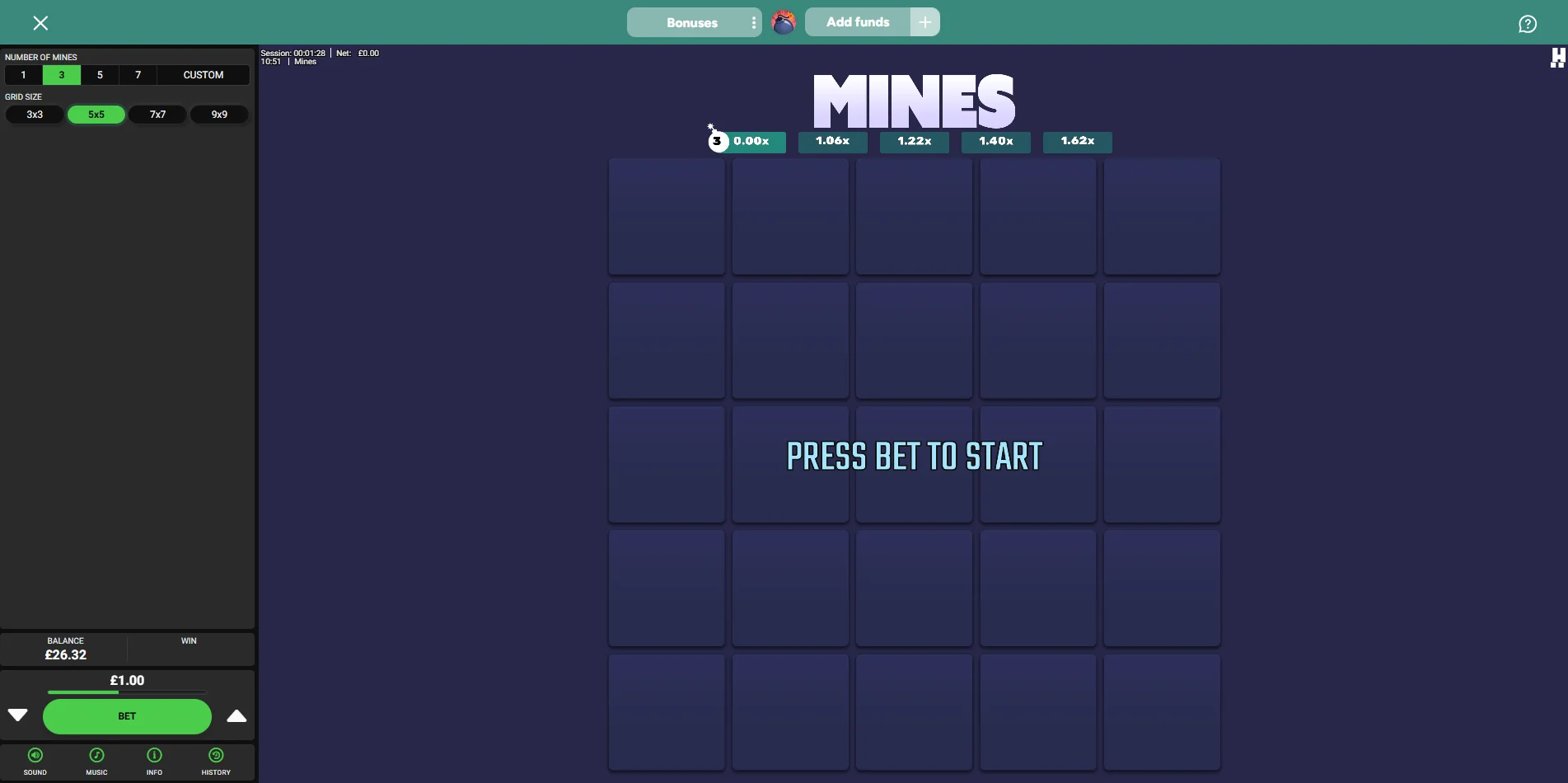
- Simple objective: Avoid the mines and reveal safe tiles.
- Quick rounds: A complete game often takes only a few moments.
- Clear controls: Most platforms use simple tile-selection and cash-out buttons.
- Adjustable difficulty: Players can often change the board size and number of mines.
New players can usually understand the basic mechanics after watching or playing a single round. Many platforms also provide a practice mode or demo version, which can help users become familiar with the interface without risking real money.
What Can Make the Game More Difficult?
Although the mechanics are simple, making sensible decisions can be more challenging. Every additional tile revealed may increase the payout, but it can also increase the possibility of hitting a mine. Players must decide when to stop, and that decision is influenced by risk tolerance rather than skill alone.
It is also important to understand that previous results do not predict future outcomes. A round with several safe tiles does not make a mine more or less likely to appear in the next round. Responsible players should treat each game as an independent event.
Beginner Tips
- Start with small stakes or use a demo mode.
- Learn how the payout multiplier changes after each safe selection.
- Set a budget before playing and avoid chasing losses.
- Consider cashing out early instead of pursuing the highest possible multiplier.
- Check the platform’s rules, fairness information, and withdrawal conditions.
For additional information about online gaming and interactive digital experiences, visit https://adventinteractive.com.pk.
Final Thoughts
The Mines betting game is easy to understand because it has a clear goal and uncomplicated controls. The real challenge lies in managing risk and knowing when to stop. Since the outcome is determined by chance, no strategy can guarantee a win. Play responsibly, use only money you can afford to lose, and view the game as entertainment rather than a reliable source of income.